The Role of Data Analytics in Shaping Modern Digital Casino Incentive Offers
Geschrieben von Lars Hansen · 25.9.2026
The Role of Data Analytics in Shaping Modern Digital Casino Incentive Offers
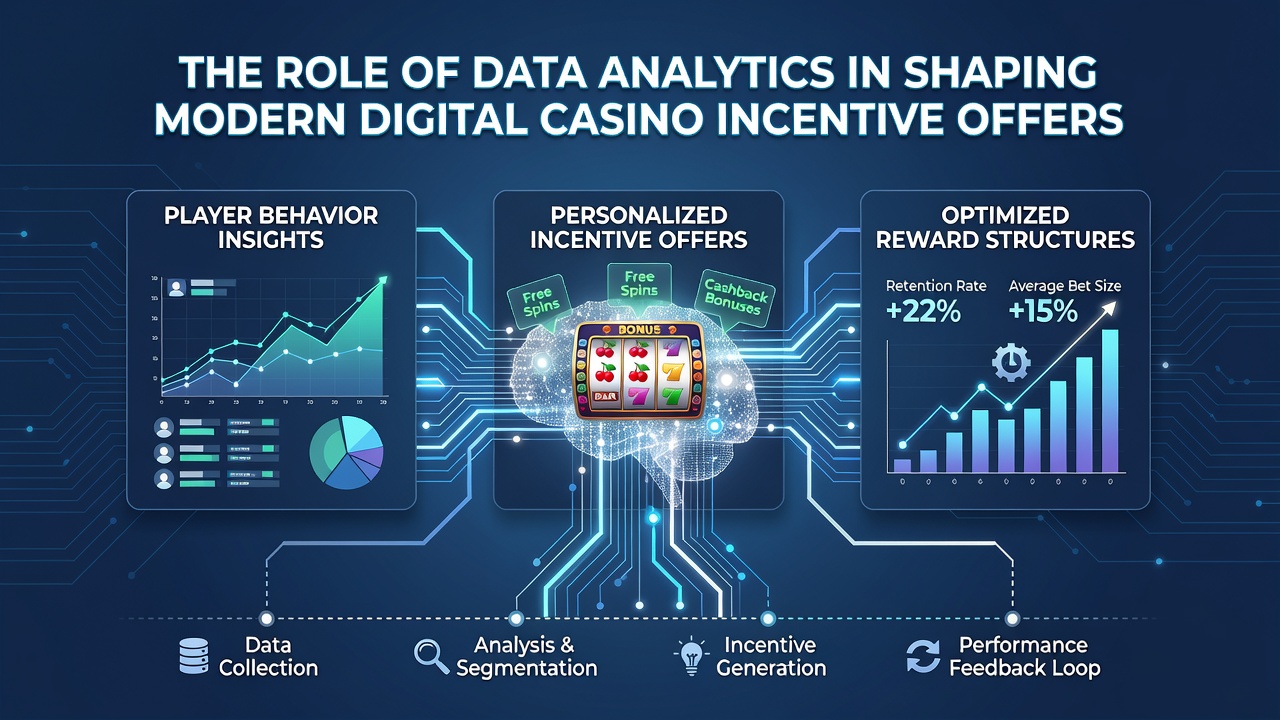
Data analytics has transformed how digital casino operators design and distribute incentive offers, turning raw player information into structured promotions that match specific behaviors and spending patterns. Operators collect details on game preferences, session lengths, deposit frequencies, and response rates, then apply statistical models to refine bonus structures without relying on generic templates.
Player Segmentation Through Behavioral Metrics
Modern platforms divide users into segments based on activity clusters rather than broad demographics alone, so high-frequency players receive reload bonuses tied to their typical deposit amounts while occasional visitors see free spin packages calibrated to their game history. Researchers have tracked how these segments evolve, with algorithms updating categories weekly as new data arrives, which allows incentive offers to shift from static rewards to dynamic packages that reflect recent play patterns. One study from a European research consortium revealed that segmented offers increased engagement rates by measurable margins compared to uniform promotions across all accounts.
Predictive Modeling for Offer Timing and Value
Predictive tools analyze historical sequences to forecast when a player might reduce activity or increase deposits, enabling operators to time incentives before those shifts occur. For instance, models flag accounts showing declining login frequency and trigger personalized deposit matches or cashback percentages, while rising engagement triggers loyalty multipliers that build on existing momentum. Figures from industry reports indicate that such timing strategies rely on machine learning techniques trained on millions of player transactions, producing offers that align more closely with individual risk tolerance and reward sensitivity than earlier manual approaches ever achieved.
Real-Time Adjustments and Testing Frameworks
Live data streams allow platforms to modify incentive parameters mid-campaign, adjusting bonus percentages or wagering requirements based on immediate uptake rates across different user groups. A/B testing runs continuously in the background, pitting one offer variation against another to measure completion rates and subsequent play volume before scaling the stronger performer to wider audiences. According to findings published by the European Gaming and Betting Association, these iterative tests have become standard practice because they reduce wasted promotional spend and surface patterns that static planning overlooks.

By September 2026, several major platforms had integrated streaming analytics pipelines that update offer eligibility every few minutes, drawing from cross-device signals to maintain consistency whether players access accounts via mobile apps or desktop browsers.
Regulatory Compliance and Risk Controls
Data systems also enforce responsible gaming limits by monitoring incentive redemptions against predefined thresholds, automatically capping bonus exposure for accounts that trigger early warning indicators. Regulatory bodies in multiple jurisdictions require operators to maintain auditable records of how analytics influence offer distribution, ensuring that promotions do not disproportionately target vulnerable segments. A report issued by Malta's gaming authority highlighted the use of compliance dashboards that correlate bonus volume with self-exclusion lists and deposit limit settings, providing oversight without halting promotional activity.
Integration With Loyalty and Retention Systems
Analytics platforms feed directly into loyalty frameworks, converting behavioral scores into tiered rewards that escalate automatically when players meet data-defined milestones. Retention teams review churn probability scores generated from login gaps and bet size fluctuations, then deploy targeted incentives that have shown measurable success in re-engaging dormant accounts. Those who've examined retention datasets note that the linkage between analytics outputs and loyalty mechanics creates feedback loops where successful offers refine the underlying models for future cycles.
Conclusion
The application of data analytics continues to define the structure and delivery of digital casino incentives by grounding every decision in measurable player activity rather than broad assumptions. As collection methods and modeling techniques advance, operators gain finer control over when, how, and to whom specific offers appear, while regulatory frameworks keep pace through required transparency in algorithmic processes. The result is an ecosystem where incentive offers function as precise instruments calibrated to individual data profiles across global markets.